
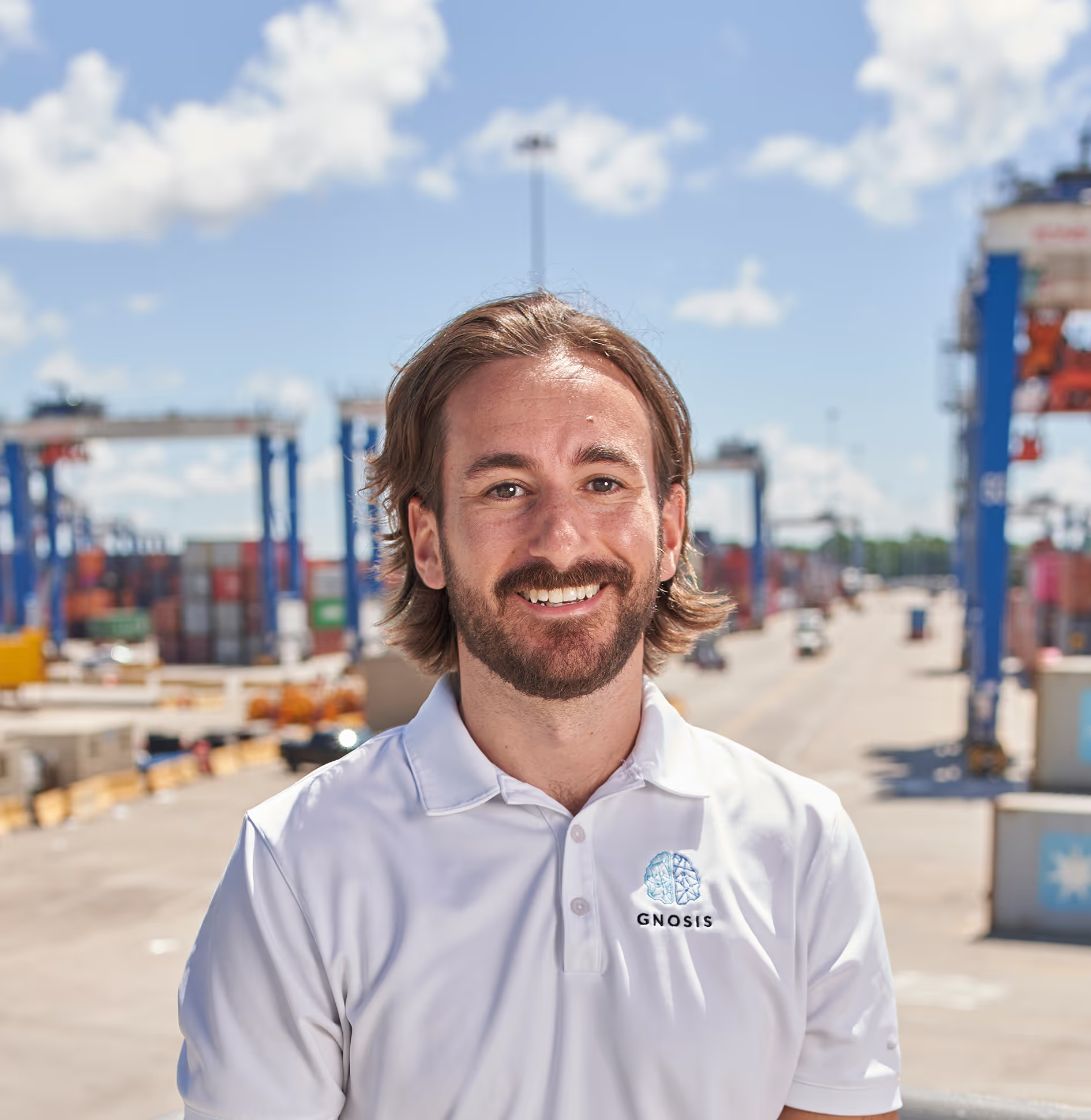
Michael Rentz
Turning Logistics Data Into Landed Cost Savings with Gnosis Freight
Logistics technology is often treated as a cost center, even when better data can protect margins and reveal savings. In this conversation, Michael Rentz of Gnosis Freight discusses where organizations quietly lose money and how supply chain teams can connect operational decisions to financial outcomes.
Episode highlights
02:50 | From cost center to growth center
Why logistics technology is often viewed as an expense, and what it takes to change that mindset.
“If you have the right teams, mindsets and technology partner, you can get to a point where it’s not a cost center, it’s a growth center.”
07:49 | Looking at logistics through a P&L lens
What changes when supply chain leaders connect logistics performance to financial results.
“During the pandemic, for the first time probably ever, we had CFOs asking, ‘What the hell is demurrage and detention?’”
11:27 | Where logistics costs add up
How unreliable operations can force companies to carry more inventory and pay a premium to move goods.
“A lot of enterprises have had to make up for a lack of reliability, and that translates into carrying more inventory… How much it costs to move goods is also at a premium.”
15:07 | Connecting operational events to landed cost
How delayed containers, missed free time and inefficient dray moves affect landed cost, and why averages can hide their true impact.
17:58 | The cumulative cost of small issues
How documentation gaps, communication problems and repetitive manual work can become significant margin problems.
“A best in class standard for an international logistics team is ‘Did we hit budget?’ I’m not familiar with people asking ‘Did we beat budget?’”
“Your most valuable assets, your people, are being asked to do the exact same task in a slightly different way 50 times a day. How much better could the system be running if you freed up that headspace for them to think critically on behalf of the business?”
19:51 | Rethinking KPIs and team priorities
Why supply chain teams need measures that reflect the value they create, and how to give them more time for the work they were hired to do.
“You have to get teams off the back foot, from a defensive to offensive posture; get them back into doing the work that’s actually in their job description.”
27:46 | Finding and resolving invoice discrepancies
How better underlying data and AI can help companies identify errors and recover money they are leaving on the table.
“Invoice discrepancies shouldn’t be a driver for profitability or growth; you should always get what you bargained for… AI has unlocked a huge amount of capability when it comes to reconciling matching invoices. The key unlock for us is having the underlying data.”
30:41 | Proving financial return to the CFO
Which metrics demonstrate the return on better logistics data, and how Gnosis Freight combines data science, tools and service around customer outcomes.
40:26 | Balancing AI with human expertise
Why dynamic data, operational context and institutional knowledge all matter when applying AI to logistics.