
.avif)

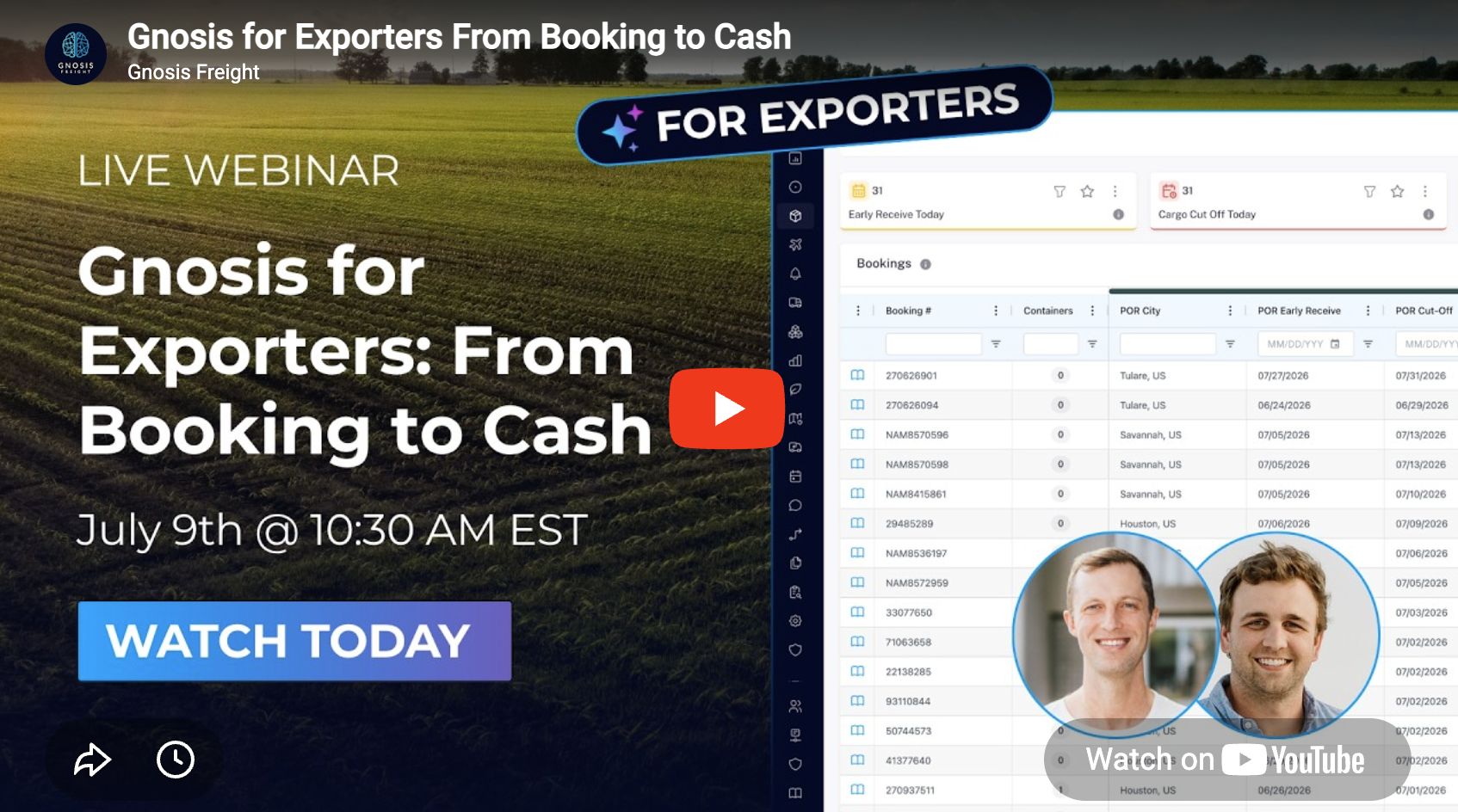
Most export teams run their supply chain out of 30 browser tabs and a spreadsheet, and their best people turn into a lookup service. This webinar shows how Gnosis Freight replaces that manual work across the full export lifecycle: booking, drayage execution, documentation, milestone tracking, and revenue recognition.
Duncan Bryan (Food, Bev, and Ag Verticals) and Jake Hoffman (CTO) walk through a live demo of Gnosis's export workflow. You'll see how the platform surfaces exceptions before they cost you money, builds lane specific document playbooks, books electronically with ocean carriers over EDI 300 and API, and tells finance the exact moment cargo loads on the vessel so they can recognize revenue and start the net 30 clock.
What the demo covers:
• Exception management. Gnosis prioritizes the bookings that need attention so teams spend their time managing exceptions instead of hunting for them.
• Lane playbooks. Required documents by destination, like a veterinary certificate for poultry to Rotterdam or specific customs paperwork for Vietnam and Indonesia, with automations tied to each milestone.
• Document parsing and generation. Parse raw customer documents with AI, or generate shipping instructions and commercial invoices on your behalf from carrier and booking data.
• Booking and planning. Live vessel schedules, carrier allocations, and cargo ready dates lined up to recommend and execute a booking, with auto accept logic that moves to the next carrier on a rejection.
• Drayage execution. First mile coordination from plant to port, plus bidding and rate work. On export moves, drayage is often a larger share of spend than the ocean leg.
• Inland ERD and cut tracking. An auditable history of every ERD and cut change from the carrier, so you can point to what was true yesterday when a vessel shift moves your inland dates.
• Revenue recognition. Match container milestones to Incoterms (CIF, and others) so finance knows when responsibility transfers and revenue can be recognized, plus what's still outstanding across purchase orders and bookings.